3100 S Tryon St, Charlotte, NC 28217

Healthy Aging: How Often Senior Pets Need Vet Care


As our beloved pets gracefully age, their needs shift, and proactive care becomes paramount. One of pet owners’ most common questions is, “How often should my senior pet visit the veterinarian?” While seemingly straightforward, the answer is nuanced and depends on several factors.
Like humans, pets experience age-related changes that can impact their health and well-being. These changes can be subtle initially, making regular veterinary check-ups crucial for early detection and intervention. The goal is to maintain their quality of life, address potential health issues promptly, and ensure their comfort in their golden years.
Understanding Senior Pet Age:
The definition of “senior” varies depending on your pet’s species and breed. Smaller dogs tend to live longer than larger breeds; cats are often considered seniors around 10 years old. Once your pet enters its senior years, its body undergoes physiological changes that necessitate more frequent monitoring.
Factors Influencing Vet Visit Frequency:
- Age and Breed: Older pets and certain breeds are more prone to specific health conditions and may require more frequent veterinary visits.
- Existing Health Conditions: Pets with chronic illnesses such as arthritis, kidney disease, or diabetes need more regular monitoring and management.
- Lifestyle and Environment: Active pets may require checks for musculoskeletal health, while those with limited mobility may need assessments for joint pain and comfort.
- General Health and Behavior: Any changes in appetite, water intake, activity level, or behavior should prompt a veterinary visit.
Recommended Veterinary Check-up Schedule:
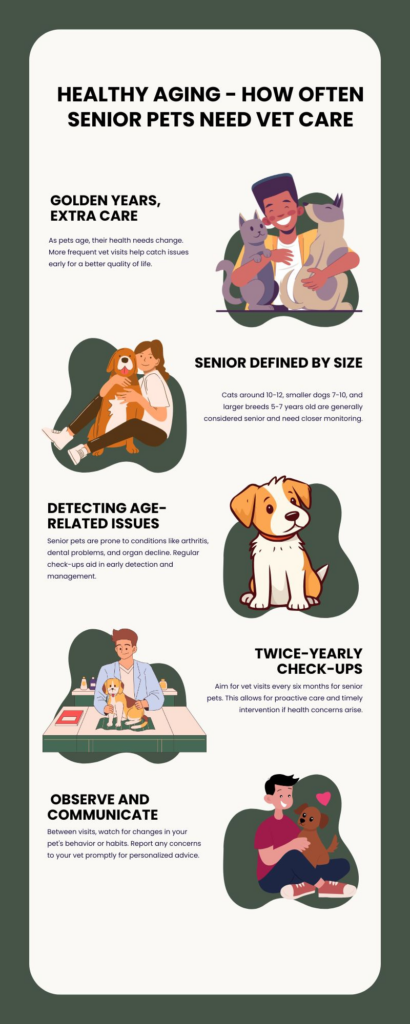
While individual needs vary, a general guideline is to take senior pets for veterinary check-ups twice a year. These semi-annual visits allow for:
- Comprehensive Physical Examinations: Your veterinarian will assess your pet’s overall health, including their heart, lungs, joints, and other vital organs.
- Blood and Urine Tests: These tests can detect early signs of kidney disease, liver problems, diabetes, and other health issues.
- Dental Examinations: Dental health is crucial for senior pets, as periodontal disease can lead to systemic health problems.
- Pain Management Assessments: Senior pets are prone to arthritis and other painful conditions. Your veterinarian can assess their comfort level and recommend appropriate pain management strategies.
- Nutritional Counseling: Dietary needs change with age. Your veterinarian can advise on appropriate food choices and portion sizes.
- Behavioral Assessments: Cognitive decline can occur in senior pets. Your veterinarian can assess their mental health and recommend strategies to support cognitive function.
Early Detection and Prevention:
Regular veterinary visits are essential for the early detection of age-related diseases. Early diagnosis and treatment can significantly improve your pet’s quality of life and longevity. By staying proactive and attentive to your senior pet’s needs, you can ensure they enjoy their golden years to the fullest.
A general rule of thumb for senior pet veterinary visits is two times a year. However, it is always best to consult with your veterinarian to determine the optimal check-up schedule for your pet based on its specific needs and health status. Never hesitate to contact your veterinarian if you notice any changes in your senior pet’s health or behavior.



Schedule Your Pet’s Visit Today
For dedicated and professional veterinary care designed to meet your pet's specific needs, please schedule an appointment.