
🐾 Epic Tails Academy (Quarterly Event) • Learn More ›
Halloween Costume Injuries in Pets: Recognizing Skin Irritation and Restricted Movement

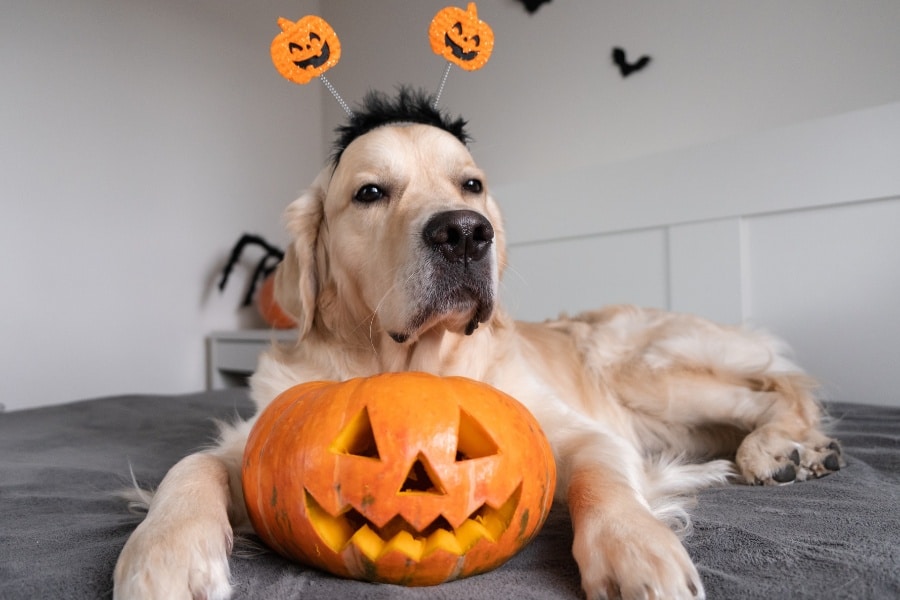
Halloween is a fun night for families, and many pet owners in Charlotte love dressing up their dogs and cats. But a costume that looks adorable can cause itchy skin, rubbing, and trouble moving, and pets can’t tell us when something feels wrong. This guide covers the signs to watch for, simple Halloween Safety habits, and when to check in with a veterinarian.
How Costumes Can Irritate Your Pet’s Skin
The skin under your pet’s fur is more sensitive than most people realize. Costumes trap heat and moisture against the body, and seams, straps, buttons, and elastic can rub the skin raw, especially around the neck, armpits, belly, and groin. Pets with thin coats, skin folds, or already sensitive skin are the most likely to struggle.
Reactions can also come from the material itself. Synthetic fabrics, dyes, glitter, glues, and metallic trim can all trigger contact dermatitis, which is skin irritation caused by touching something the body doesn’t tolerate. Costumes pulled out of storage, or made for people, may also carry strong detergents or fragrances that bother your pet.
Fur can also tangle in zippers and Velcro, leading to mats and tugging on the skin underneath. Long-haired and double-coated pets are especially prone, so it’s worth lifting the costume every so often to check that the skin looks normal.
Veterinary teams regularly see skin problems that begin as a small itchy patch after dress-up and turn into painful hot spots. The reason is simple: when pets lick and chew at an irritated area, they add moisture and bacteria. Stopping the cause early makes recovery much easier.
Signs of skin irritation to watch for include:
- Redness, bumps, or a rash where the fabric touches the skin
- Constant scratching, licking, or chewing under the costume
- Hair loss or broken fur from rubbing
- Swelling, especially around the face or muzzle
- Warm, moist, or smelly patches of skin
- Flinching or crying when you touch a certain area
Spotting Restricted Movement and Overheating
A costume should never stop your pet from moving, seeing, hearing, or breathing normally. Tight chest straps, snug neck openings, and stiff skirts can limit how the shoulders and legs move. Wings, hats, and long tails can also throw off balance and block your pet’s view.
Hoods, hats, and masks can also cover the ears and eyes. When pets can’t see or hear what’s happening around them, they may startle, stumble, or panic, which makes falls and tangled legs more likely.
Your pet may be telling you the costume is too restrictive if you notice:
- Stiff, awkward walking or tripping
- Freezing in place or refusing to move
- Struggling to sit, lie down, or turn the head
- Pulling or biting at the outfit, or trying to back out of it
- Heavy panting, drooling, or noisy breathing
- A tucked tail, flattened ears, or hiding
Flat-faced breeds such as Pugs, Bulldogs, and French Bulldogs are more vulnerable, as are older pets with sore joints. A snug collar or chest piece can make breathing harder for them. Even warm autumn days in Charlotte can lead to overheating when a pet is wrapped in fabric, so remove the costume at the first sign of heavy panting. If your pet’s gums look pale or blue, or breathing seems labored, take the costume off and get your pet seen right away.
Halloween Safety Tips for Choosing the Right Costume
The safest costume is often the simplest. A light bandana, a festive collar, or a soft, stretchy outfit made for pets is far less likely to cause trouble than a full-body design. Choose breathable fabric, and avoid anything that covers your pet’s eyes, ears, nose, or mouth.
A few habits make a big difference:
- Check the fit: You should be able to slide two fingers under any strap or collar.
- Skip small parts: Buttons, bells, ribbons, glitter, and loose trim can be chewed and swallowed.
- Avoid human products: Never use makeup, hair dye, or sprays on your pet’s fur or skin.
- Do a trial run: Let your pet wear the outfit for a few minutes days beforehand, with treats and praise.
- Wash it first: Use fragrance-free detergent and rinse well to remove irritants.
- Stay close: Never leave a costumed pet unsupervised.
Remove the costume before car rides, meals, and active play. Loose fabric can snag on furniture, catch on branches, or wrap around the legs when your pet runs.
Your pet doesn’t need a costume to be part of the fun. If your pet freezes, shakes, hides, or keeps pulling at the outfit, take it off. Your pet’s comfort matters far more than the photo.
When to Call a Veterinarian About a Costume Reaction
Start by removing the costume right away. Rinse irritated skin gently with lukewarm water, pat it dry, and use a cone if you have one to stop licking. Avoid human creams or ointments unless your vet team tells you to use them, because pets often lick them off. Snap a quick photo of the area, which helps your vet track changes, and bring the costume along so the materials can be checked.
Schedule a visit if redness, itching, or a rash doesn’t improve within a day, if the skin is broken, oozing, or smelly, or if your pet limps or seems sore after wearing the costume. Facial swelling, hives, vomiting, or trouble breathing may signal an allergic reaction, and your pet should be seen right away.
At the clinic, your vet team will examine the skin, check for infection, and look for signs of an allergic reaction. Treatment may include medicated shampoos, topical products, anti-itch medication, and antibiotics if an infection has developed, along with a cone while the skin heals.
Conclusion: Keep the Fun and Skip the Irritation
Costume mishaps often start small, but itchy skin and restricted movement can quickly lead to infections, injuries, or heat stress. Good Halloween Safety habits, such as a well-fitted breathable costume, short trial runs, and close supervision, go a long way. This article offers general guidance and is not a substitute for a veterinary exam, so whenever you are unsure, have a veterinarian look at your pet.
At Epic Tails Veterinary Clinic in Charlotte, our team is here to help you keep your pet comfortable, healthy, and happy through the holiday season and beyond. If a costume leaves your pet itchy, sore, or uncomfortable, we are ready to help.
At Epic Tails Veterinary Clinic in Charlotte, we are committed to keeping your pet comfortable and healthy with attentive, compassionate care. Book your appointment today and give your pet the care they deserve.
Frequently Asked Questions
Q1. How long can my pet safely wear a costume?
Ans: There is no set time that suits every pet. Start with a few minutes, watch your pet’s body language, and take the costume off if you see panting, stress, or irritation. Short, supervised sessions are much safer than wearing it all evening.
Q2. Is it okay to put a costume on a puppy or a senior pet?
Ans: Puppies can try a costume in short, positive sessions, but their skin is delicate and they can wriggle into trouble. Senior pets with stiff or sore joints may find even light outfits uncomfortable, so keep it very simple and ask your vet team if you are unsure.
Q3. What are safe options for Halloween Safety if my pet hates costumes?
Ans: A soft bandana or a festive collar can add holiday spirit with very little risk. Many pets are happiest in comfortable everyday clothes, so a quiet spot at home and a favorite chew can be the better choice.
Q4. Can cats wear costumes?
Ans: Some calm cats tolerate a light accessory, but many get stressed by anything on their body. If your cat freezes, flattens the ears, or tries to hide, skip the costume. Never use anything that restricts the neck, legs, or breathing.
Q5. Should I see a veterinarian in Charlotte if the redness fades after I remove the costume?
Ans: Mild redness that clears quickly may not need treatment, but keep an eye on the area. If the itching returns, hair starts to fall out, or the skin looks sore, schedule a visit and bring photos to show how it changed.
Related Articles
Schedule Your Pet’s Visit Today
For dedicated and professional veterinary care designed to meet your pet's specific needs, please schedule an appointment.